

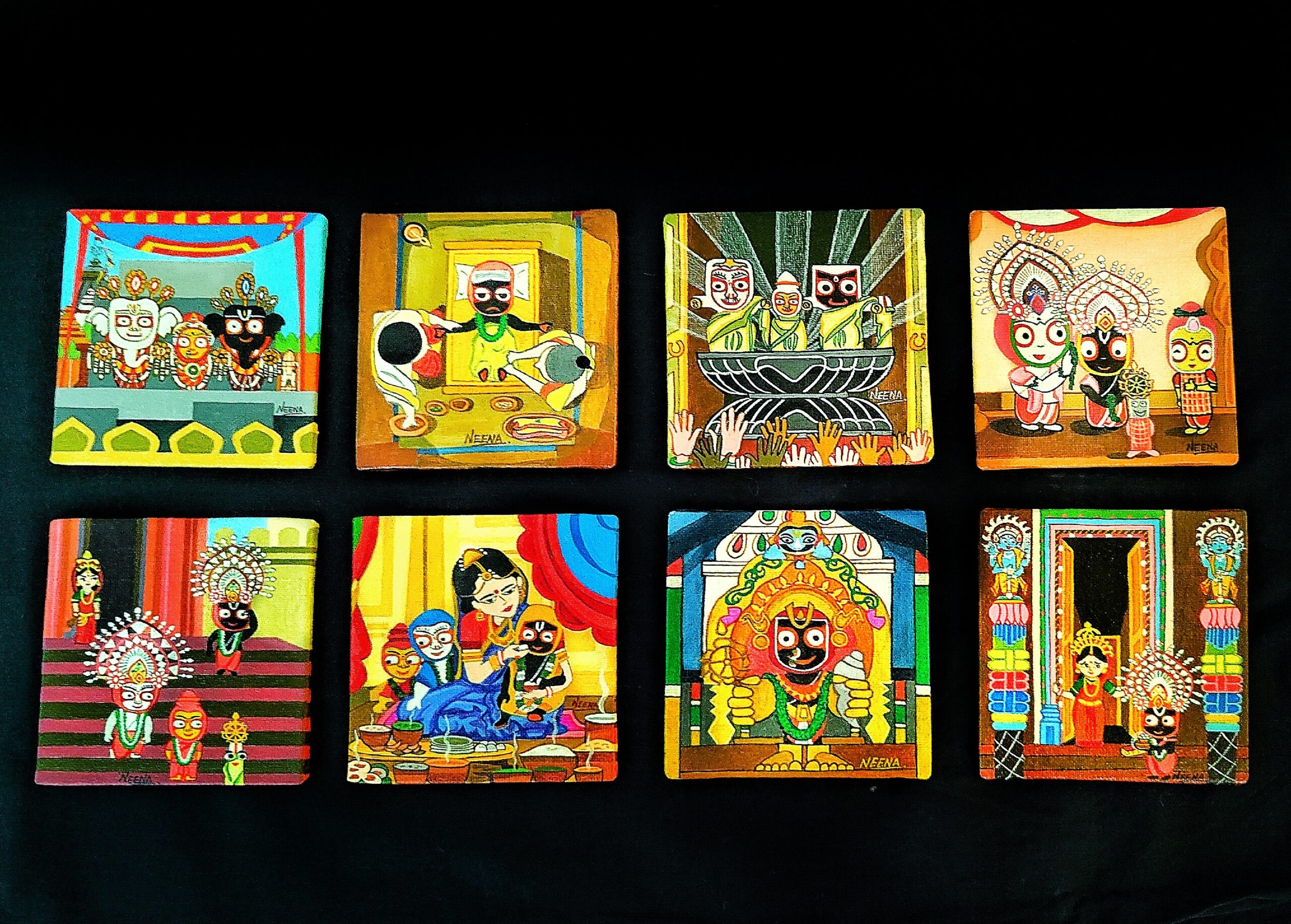
रथारूढो गच्छन् पथि मिलितभूदेव पातालिकैः
स्तुतिप्रादुर्भावं प्रतिपदमुपाकर्णयद्भिः सुरैः ।
रथारूढं देवं, पथि, जनकृत-गानानुकम्पितं
श्री जगन्नाथ स्वामी नयन-पथ-गामी भवतु मे ॥
May I always see Lord Jagannath riding on his chariot, moving along the road and accompanied by celestial beings singing his praise as he showers his blessings upon all.
In a world where machines dominate creation and fast-paced manufacturing has become the norm, I find my soul grounded in the timeless rhythm of hand-crafted traditions. We honor the essence of Indian culture, and what better way to do that than through the magnificent celebration of devotion, art, and heritage—the Jagannath Rath Yatra. This festival, held in Puri, Odisha, is more than just a religious procession; it is a moving spectacle of divine stories, timeless values, and unshakable devotion.
My latest collection pays homage to this sacred event. Consisting of nine acrylic 4 x 4 canvas paintings, each piece illustrates a significant episode in the divine journey of Lord Jagannath, Maa Laxmi, Lord Balabhadra, Devi Subhadra, and the sacred Sudarshan chakra. Every brushstroke is infused with emotion, reverence, and storytelling. This collection is not just about aesthetics—it’s about feeling the divine in every frame and honoring the stories that continue to guide us spiritually.
These paintings aren’t mere depictions. They’re a form of visual storytelling, a soul-to-soul connection between the divine and the devotee. From vibrant color palettes to traditional iconography, this collection speaks volumes about our spiritual roots, our love for hand-made art, and the way we express devotion through creativity.
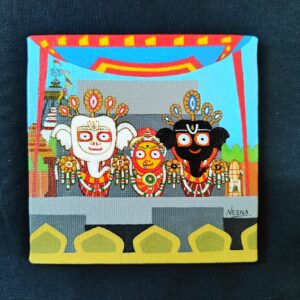
Snana Purnima: The Divine Bath
The grand celebration of the Jagannath Rath Yatra begins with a deeply symbolic and visually stunning ritual known as Snana Purnima. On this day, the idols of Lord Jagannath, Lord Balabhadra, and Devi Subhadra are brought out from the sanctum and ceremonially bathed with 108 pitchers of holy water drawn from a sacred well. This act of Snana (bathing) is not just a cleansing ritual but a spiritual awakening, reminding devotees of the purity and divinity of the deities. What makes this moment even more mystical is the transformation of Lord Jagannath into the Hathi Vesha, or the elephant-faced form. He appears with the features of Lord Ganesha, symbolizing the unity and interconnectedness of the divine forces within Hindu belief. This rare visual brings awe and reverence, blending two powerful forms of the Divine into one sacred expression.
In my artwork, I’ve attempted to portray this rare form of Jagannath Ji in vibrant acrylic on a 4×4 inch canvas. His serene yet majestic elephant-like face reflects both innocence and supreme power. Painting this canvas wasn’t just a creative process, it was devotional. Every brushstroke was like a chant, every shade of color a celebration of our Indian roots. This artwork becomes more than just a painting; it is a living memory of a sacred event, meant to bring blessings and connection to any space it enters.
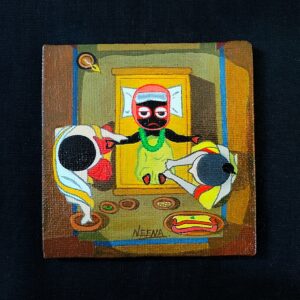 Anasara: The Divine Recuperation
Post the grand ceremonial bath known as Snana Purnima, Lord Jagannath is believed to fall ill due to exposure to the cold water. As a result, He retreats into complete seclusion for a period of about fifteen days. This sacred interval is called Anasara, during which the deities remain hidden from public view and there are no regular darshan or rituals. Devotees wait patiently during this time, praying and yearning for His recovery, knowing that this withdrawal is part of the divine rhythm of renewal and restoration.
To represent this deeply symbolic phase, my second canvas has been painted using a palette of serene whites and soft blues. The minimal yet expressive strokes reflect a quiet stillness, mirroring the absence felt in Puri during Anasara.
 Nava Yauvana: The Fresh Youthful Form
After the sacred period of Anasara, when Lord Jagannath is kept away from public view to recover from His ceremonial bath, the long wait of the devotees comes to an end with the Nava Yauvana Darshan—literally meaning “The Youthful Appearance.” On this special day, Lord Jagannath emerges looking rejuvenated, vibrant, and glowing with divine charm. It’s a moment of deep spiritual significance, symbolizing rebirth, renewed energy, and the reassurance of divine presence. Pilgrims who have waited patiently for days are finally blessed with His darshan, and their hearts overflow with devotion and joy. The atmosphere in Puri becomes electric with excitement, as chants, music, and rituals bring the entire town alive in celebration.
To capture the radiance of this divine reappearance, I painted the canvas using rich hues. The brushstrokes flow with motion to convey the energy of a deity newly revealed, full of divine life. Through this painting, I wanted to honor the emotional beauty of reunion—the sense of spiritual completeness that fills the hearts of devotees when they witness their beloved Lord again. It’s not just the sight of the idol, but the feeling of hope, faith, and unconditional love that truly defines Nava Yauvana Darshan, and I’ve strived to channel that essence through color and composition.
 Pahandi: The Grand Departure
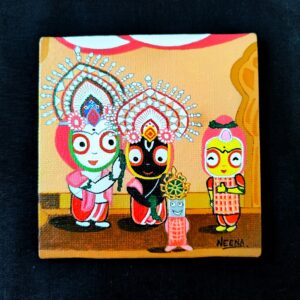
The fourth canvas in my collection captures a tender and imaginative moment during the Pahandi — the sacred procession where Lord Jagannath, Lord Balabhadra, and Devi Subhadra are brought out of the sanctum to begin their journey toward the grand chariots. In my artistic interpretation, I wanted to portray not just the ceremonial grandeur, but also the divine intimacy between the siblings. In this scene, they are lovingly dressing each other — fixing each other’s garlands, adjusting their ornaments, and adorning one another with affection and playful reverence. It is a moment of divine preparation, where the gods themselves are involved in the ritual of beautifying each other before stepping out to greet the world. This creative depiction reflects the bond of love and unity shared among them — a bond that devotees deeply relate to, not just as worshippers, but as family.
I painted this canvas with vibrant colors to bring out the warmth of their relationship — the reds and yellows representing festive joy, and the touches of white and gold reflecting purity and divinity. Rather than focusing solely on the ritual, I tried to capture a quieter, softer story that often goes untold: the gods not as distant icons, but as living beings who care for each other deeply. Their eyes sparkle with excitement, and their expressions carry a sense of mischief and warmth, like siblings getting ready for a grand celebration.
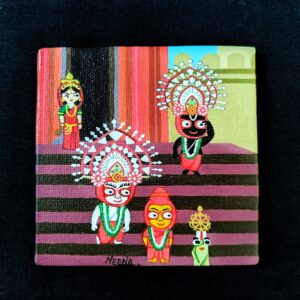 The fifth canvas in my collection captures one of the most emotionally stirring moments of the Rath Yatra — when Lord Jagannath, accompanied by Lord Balram, Devi Subhadra, and the divine Sudarshan, gracefully descend the grand steps of the Jagannath Temple. It’s a scene filled with anticipation and divine energy, as the deities are about to mount their majestic chariots for the sacred journey to Gundicha Temple. I wanted to portray not just their regal presence, but the powerful emotion woven into this ritual. Draped in vibrant garments and adorned with flowers, they carry an aura of compassion and strength. Devotees cheer in spiritual ecstasy, yet there is a serene depth to this transition — a feeling that something deeply divine is unfolding.
What makes this canvas truly poignant is the presence of Goddess Lakshmi, standing silently at the temple doorway, watching her beloved Lord Jagannath leave. This moment highlights the emotional depth of divine relationships — a reminder that even the gods experience love, longing, and gentle heartbreak. It’s a reflection of our own human emotions, captured in the divine language of devotion and ritual. Through this painting, I aimed to make the viewer pause and feel — not just see — the weight and beauty of this sacred farewell for the 9 days.
 Reaching Gundicha Temple
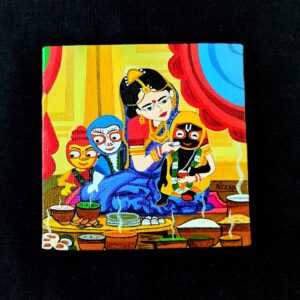
In the next canvas of my Rath Yatra collection brings to life the moment of divine affection between Lord Jagannath and Maa Gundicha, his maternal aunt. As the chariots finally arrive at Gundicha Temple, it marks not just a physical destination but an emotional reunion steeped in warmth and devotion. In this painting, I chose to go beyond the traditional visuals and capture a more intimate, heart-touching scene — Lord Jagannath sitting lovingly in Maa Gundicha’s lap, just like a child returning to his maternal home after a long journey. The Lord is seen joyfully enjoying the meal that she lovingly offers with her own hands. This is not merely a moment of hospitality; it’s a moment of deep spiritual tenderness, where the divinity of a god and the love of a mother blend into something beautifully human.
Through this depiction, I wanted to express the nourishing energy of motherhood, which even the supreme divine cherishes and submits to. The canvas is painted in soft earthy tones with a warm golden glow to emphasize the peace, joy, and nurturing presence of Maa Gundicha. Her expression radiates motherly care, and Lord Jagannath’s playful, adds a childlike innocence to the divine. In this one frame, you witness devotion, reunion, fulfillment, and sacred emotion — an artistic homage to the idea that the divine also seeks love, comfort, and home.
 Raja Bhasa or Suna Besha or Rajadhiraja Besha
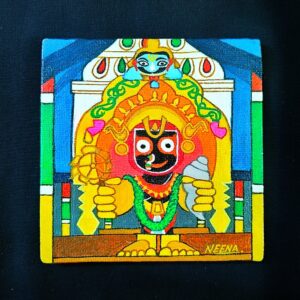
The eighth canvas in my Rath Yatra series glorifies one of the most awe-inspiring sights during the festival — the divine moment when Lord Jagannath is adorned in the grand Raja Besha, or royal attire, signifying his status as the King of the Universe. In this painting, I have portrayed Jagannath ji seated gracefully, enveloped in rich, opulent garments embroidered with gold and red, glistening with divine energy. His crown sparkles like the morning sun, and his eyes radiate calm authority. This attire is not just an ornamental tradition — it’s a sacred expression of the Lord’s divine kingship, a time when the people of Puri, and devotees everywhere, acknowledge him not just as a deity, but as their ruler, protector, and eternal guardian.
I focused on the richness of color and detail to convey not just external beauty but spiritual significance. The throne is painted with intricate carvings, flowers are offered in abundance, and there’s a serene majesty in the air. What makes this moment emotionally powerful is the blend of festivity and reverence — the divine takes on a royal form, and yet remains deeply close to every devotee’s heart. It’s a visual celebration of love, loyalty, and divine authority, a reminder that even though he rules the universe, Lord Jagannath remains accessible, tender, and deeply connected to every soul who seeks him. Through this artwork, I wanted to freeze that moment where the divine and royal meet, where glory in the same sacred space.
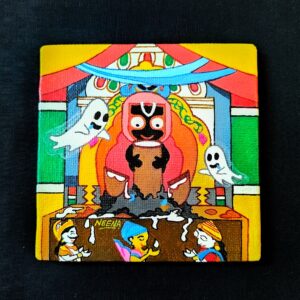 Adhara Pana – Offering to Spirits Before Rath Yatra Ends
The next canvas of my Rath Yatra series is devoted to the divine ritual of Adhara Pana, one of the most symbolic and mystical moments of the festival. In this painting, I have depicted Lord Jagannath seated gracefully on his chariot, with three large earthen pots placed in front of him, each filled with a sacred herbal drink made of milk, sugar, bananas, and other cooling ingredients. This prasad is not consumed by the Lord or devotees, but instead is a ceremonial offering for the divine spirits who are believed to have accompanied the Lord during the entire Rath Yatra journey. Surrounding Jagannath ji in my artwork are faint, ethereal forms — representing ancestral spirits, guardian beings, and mystical entities — all gathered respectfully to receive this sacred drink as a farewell gesture before the Lord’s return to the main temple.
The presence of these spiritual beings adds a magical layer to the scene, showing the unseen side of devotion — where faith transcends the physical and acknowledges the metaphysical world. Jagannath ji is painted with a soft expression of compassion and fulfillment, as if silently blessing the spirits gathered before him. The breaking of the pots, which follows this offering, is symbolic of releasing the energy, gratitude, and completing the cycle of the Yatra. My aim through this canvas is to reflect the reverence and grace of this ritual, reminding us that faith is not just what we see — it is also what we feel beyond the visible realm.
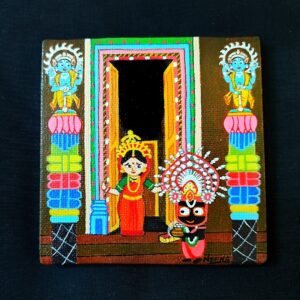 Niladri Bije: The Homecoming
In the final and most emotional canvas of the series, I have portrayed the divine moment of Jagannath Ji’s return to the main temple, known as Niladri Bije. This marks the completion of the grand Rath Yatra. In this painting, Lord Jagannath stands humbly at the door, holding a bowl of Rasgullas in his hand — a sweet gesture meant to appease Goddess Lakshmi, who stands with an emotional expression at the threshold of the sanctum.
Lakshmi Ji is upset because she was not taken along on the Rath Yatra to Gundicha Temple, and Jagannath Ji, aware of his playful negligence, tries to win her heart back — not just with sweets, but with his loving and repentant gaze. In this canvas, their divine relationship reflects the familiar love and forgiveness found in every human bond — filled with misunderstanding, reconciliation, and deep-rooted affection. The offering of Rasgullas, a traditional sweet, holds symbolic value — it’s not just food, but a token of love, surrender, and reunion.
This canvas captures the emotional feelings of the festival and leaves the viewer with a sense of divine warmth — a reminder that even gods go through moments of reconciliation and that love always finds its way back home.
Each canvas was painted with premium acrylics on high-quality cotton canvas, mounted to form perfect squares of 4 x 4 inches. These small frames may appear modest, but within them lie grand tales of faith, tradition, and divine play. Acrylic paints allow the vibrancy and precision that such epic subjects deserve—preserving every detail and emotion, stroke by stroke.
This collection holds a special place in my heart because it blends narrative art with sacred celebration. It’s a reflection of how deeply art and faith are intertwined in our Indian culture. As an artist, I believe in not just painting images but attending and I am a part of the rath Yatra itself.
Leave a Reply